
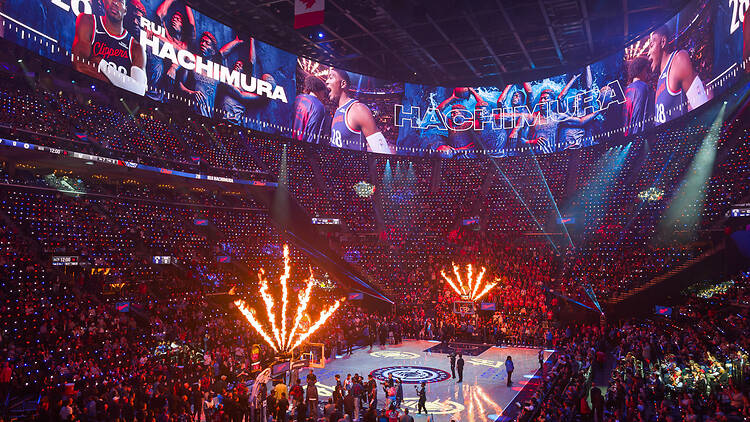
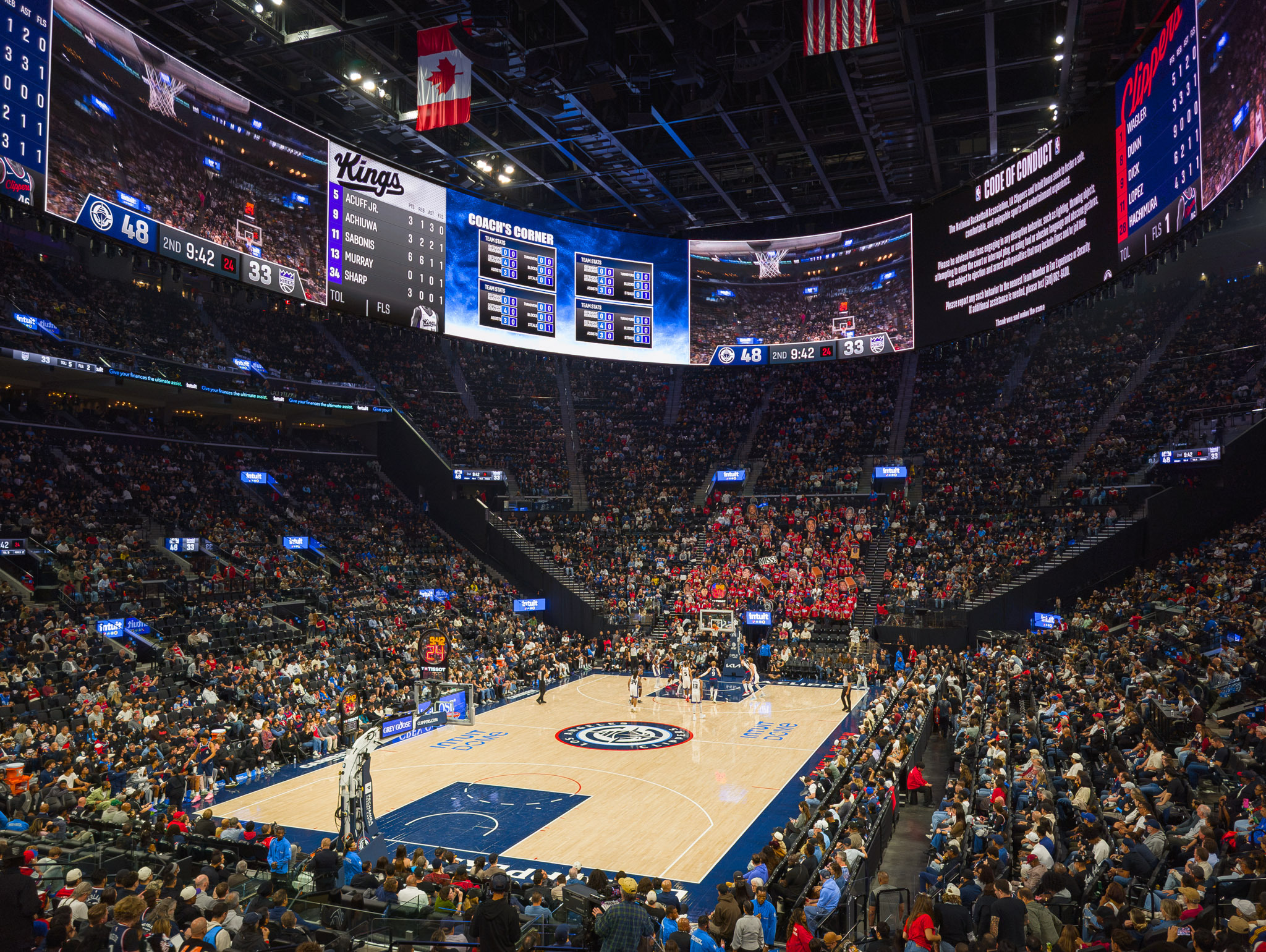
In most NBA arenas, once you get about 20 to 30 rows behind the basket, the stands switch from gently ascending seats to swanky lounges and suites, usually with a steep upper deck stacked above those premium spots. But on one side of the L.A. Clippers’ Intuit Dome, the seats just keep going and going.
Meet the Wall: a soccer stadium–like supporters section that, at its lengthiest point, sports an unbroken 51-row climb. It’s also reserved exclusively for Clippers fans (yes, snarky Lakers fans, they do exist). Book a spot in the 4,500-seat section and you’ll be met with a very clear condition: No opponent gear, Clippers fans only.
I scoped out Intuit Dome before its debut in 2024, but the last time I actually saw the Clippers play they were still in Downtown L.A., sharing the—sigh—Crypto.com Arena with the Lakers. Now, after seeing this season’s home opener in Inglewood and witnessing the Wall in action, I get it: The pitch of the seating bowl is just steep enough that the sizable section fills the entire background behind the basket with a jubilant support section for the Clippers—or a wildly distracting backdrop for the visiting team. The players notice it. The fans notice it. It’s electric.
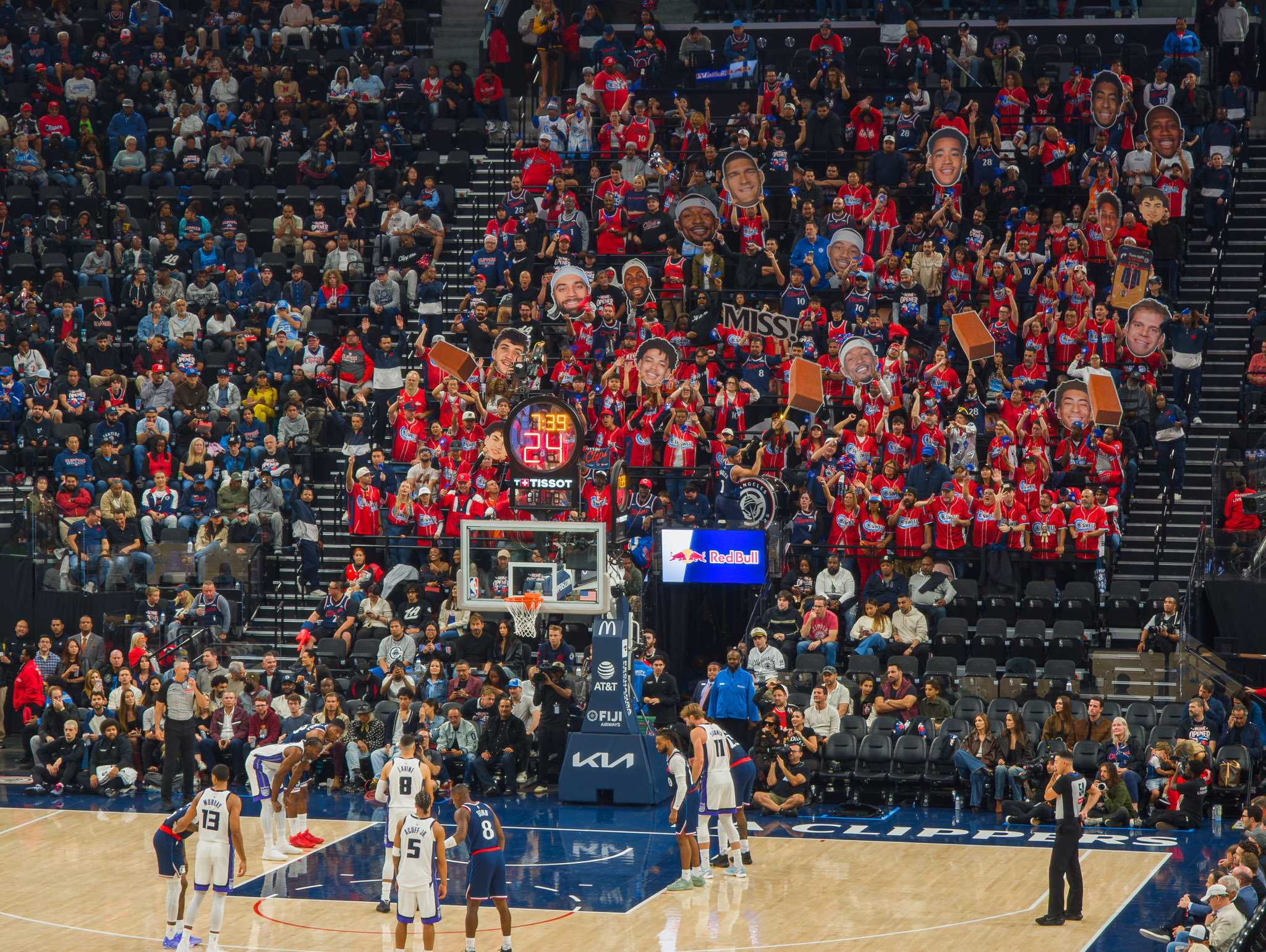
I’ve been attending NBA games sporadically since I was a kid, and there’s a comfort that comes from the squeaky-shoes, foul-booing familiarity of live basketball. But after a summer spent watching World Cup soccer, I was kind of shocked to see how many traditions that I recognized from the pitch translated onto the hardwood at Intuit Dome: a sea of home team colors behind the goal, coordinated chants and a bass drum whipping up supporters.
You can probably tell that I came away from the game just fascinated by the Wall, so I wanted to dive into all of the rules—both official and unofficial—of the one-of-a-kind seating section. I turned to Louanne Wallace, the Clippers’ chief marketing officer, for the full story on them. Because they’re not merely suggestions, the Wall truly has rules—“We have to,” Wallace tells me. “We’re trying to maintain this community for our Clippers fans.”
The team tries to make those rules (no opponent gear, Clippers fans only) very clear. If you miss it when you buy your ticket for a seat in the Wall, it’s in your confirmation email and your know-before-you-go follow-up. If all of those warnings have slipped by you, a staff member at the arena will let you know that, yes, you can still sit here, but you’ll need to take that opposing team jersey off. And if not? They’ll work with you, based on availability, to try to relocate your seats.
You’re specifically forbidden from cheering for the opposing team or wearing any gear from another NBA team—not just the opposing team, but any other NBA team that’s not the Clippers. So have a Rui Hachimura jersey from when he was on the Lakers? Leave it at home. That said, the Wall is ultimately pretty forgiving: You don’t need to be an exuberant cheerer or even be wearing Clippers colors.
“Just because it’s the Wall, it doesn’t mean you have to be standing and cheering the whole time,” says Wallace. “You can sit there with your kids wearing normal clothes, cheering on the Clippers silently in your head. We just wanted a space that didn’t have the opposing team sitting there.”
The Swell, on the other hand, is a little bit more particular. This 13-row section at the front of the Wall is reserved for passholders who are assigned spots based on when they arrive at the arena. These diehard supporters have to follow a “stand, cheer and chant” code, which means you’re expected to be doing all of those things pretty much whenever the ball is in play—with a brief sitting reprieve during time outs or if the Clippers are shooting a free throw into that basket. Otherwise, expect to see them waving their arms or any number of signs, from a fence to a brick to big-head depictions of players.
“It feels like this really safe space where you can cheer as loud as you want and act as silly as you want, and do all of that without feeling judged,” Wallace explains.
It’s the heartbeat of the arena—quite literally, as it’s where you’ll find the team’s “Wall monitor” pounding away on a bass drum throughout the game. There’s a bit more going on here than you might think: The Wall monitor is versed in the league’s code of conduct, so while he’s coordinating chants and crowd movements, he’s also ensuring that fans aren’t yelling profanities at the referees. And across the wider section, there are about 15 “Swell leaders” scattered around to help keep chants in unison—nothing as complicated as professional soccer’s full-blown anthems, but cheers clear enough that you can hear them once and follow along.
New NBA arenas aren’t exactly built every day, but you can already see some elements of the Wall seeping into the competition: A recent refurb of Salt Lake City’s Delta Center has added considerably steeper lower bowl seating, and Oklahoma City’s upcoming Continental Coliseum is touting how compact its seating setup will be. (“Imitation is the best form of flattery,” Wallace tells me. “At the end of the day, we’re all here to try to create the best fan experience.”)
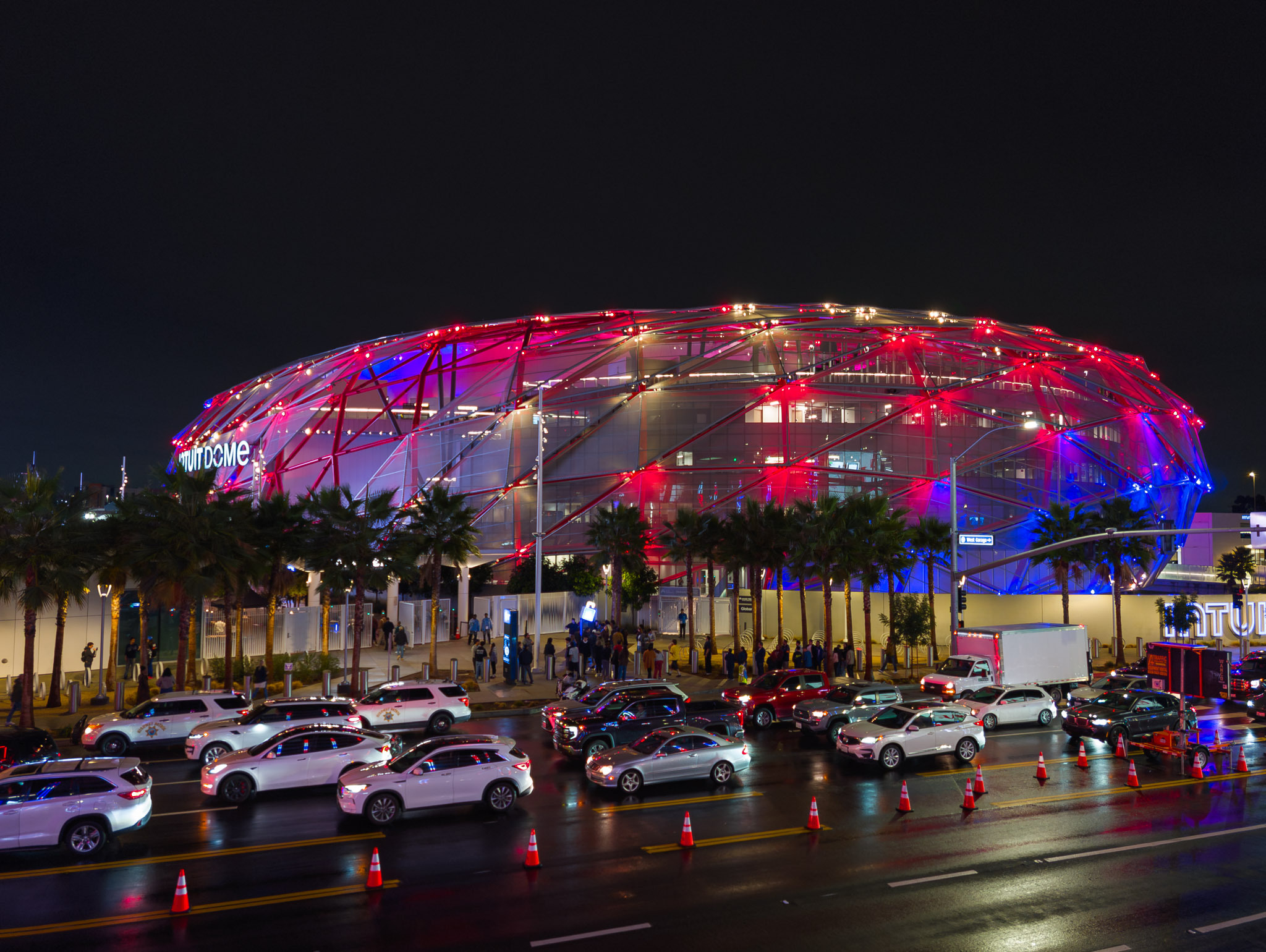
Speaking of the fan experience, I happened to be there on a curious night: It was the first game since the close of the Kawhi Leonard scandal, in which the now-former Clipper was found to have agreed to an endorsement deal that circumvented the league’s salary cap. As a result, Leonard and the Clippers were fined, front office leadership was suspended and the team was stripped of its first-round draft picks through 2033. For fans of a team that’s already persistently and unfairly put down as the city’s number two team, it presents a potentially grim future.
But that certainly wasn’t the vibe inside the arena—maybe the free parking and jersey exchange on opening night helped. It’s a tough set of circumstances for sure, and an arena’s seating configuration, of all things, can’t be expected to overcome those challenges. That said, I did find myself thinking about just how much the Wall meant to the fan experience that night.
“We have always been about our fans and making sure that they have an incredible experience,” Wallace says. “It is not, oh, you’re so lucky to be here. They play a really important role in our home court advantage. It’s been the same since our very first year at Intuit Dome, and it’s not any different this year: Our team needs you, our arena energy needs you, and so I think the team feels the fans, and they feel appreciated.”


