
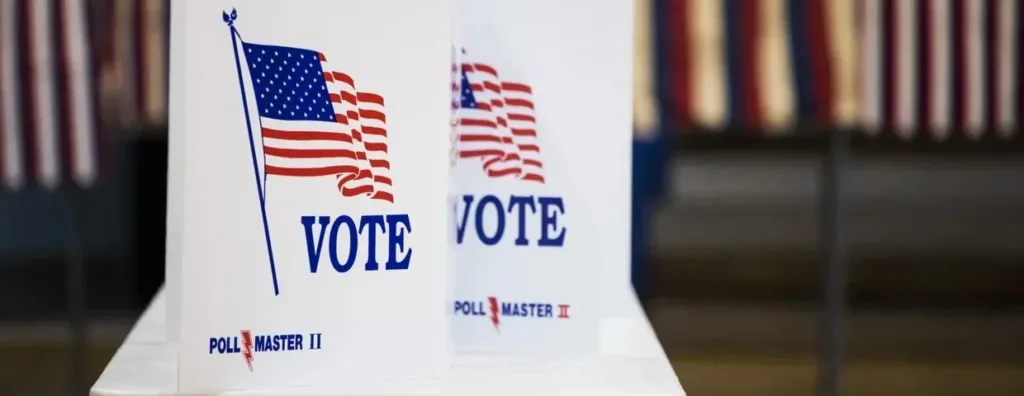

It’s finally here … Election Day 2026.
It’s time to make your voice heard. You opted not to vote by mail, instead choosing to go to your local polling place and casting your vote in person.
So, what should you expect now? Here is a primer to make your voting experience smooth and easy.
Pennsylvania’s polling places open to voters at 7 AM and close at 8 PM. Please note: if you are in line to vote at 8 PM, you are permitted to finish the task. If you join the line at 8:01 PM, you’re out of luck.
You may search for your voter registration status with your Name or your PennDOT Driver’s License or PennDOT ID. Your party affiliation and polling place address will be displayed once you have provided an exact match with the information on your voter registration record.
Not sure where the polling location is in your neighborhood. The Polling Place Search tool will help you locate a polling place for Election day. Begin by typing the county of residence and city in the dropdown menus below. Then enter the street name, the house number, and zip code.
While campaigning is not allowed inside a polling place, it is permitted as long as campaign workers, signs and materials stay at least 10 feet from the voting-room entrance.
Poll workers, poll watchers, and election officials should not wear clothing, buttons, or other items that support a political party or candidate.
These rules should not stop an eligible voter from voting. Voters may wear clothing, buttons, or hats that show support for a candidate when they enter the polling place to vote.
However, voters may not campaign for or encourage others to support a candidate while inside. The judge of elections should ask anyone who is campaigning to stop.
Voters may bring campaign literature into the polling place or voting booth to help them make their choices. They must take these materials with them when they leave.
Yes. But only if it’s your first time voting at a new polling place. Approved forms of photo ID include a Pennsylvania driver’s license or PennDOT ID card; an ID issued by any Commonwealth agency; an ID issued by the U.S. Government; a U.S. passport; an U.S. Armed Forces ID; a student ID; or an employee ID.
Procrastinators unite. You may surrender the mail ballot, along with the outer return envelope, at your polling place. Upon doing so, you will be permitted to vote. If you do not have a mail ballot to surrender, you can vote by provisional ballot. Your county board of elections will verify that you did not vote by mail before counting your provisional ballot.
Read more about provisional ballots here.
This does occasionally occur. Don’t panic. You have the right to vote using a provisional ballot. Your county board of elections will verify that you did not vote by mail before counting your provisional ballot.
Go to a table or booth and cast your vote. Please fill in the entire oval for the candidate of your choice. If you mark your choice with a “X,” it may not be properly read by the optical scanner. Check both sides of your ballot to make sure that you have not missed any contests or ballot referendums.
When you are finished, take your completed ballot to the tabulating scanner, A poll worker will be able to assist you in placing your ballot properly to be read by the machine. Upon completion, chances are an American flag will pop up on the screen, meaning you have officially voted. Take a sticker, wear it proudly for the rest of the day.
In general, no. Uniformed and plain clothes officers must stay at least 100 feet away from the polling place entrance.
There are three exceptions: An officer may enter if called to keep the peace, as outlined below; An officer may enter to vote; An officer may be present if the polling place is in a building that also contains a police station.
When needed, local election officials or three voters from the precinct may ask local officials, including constables, sheriffs, or police officers, to:
Elections are run by state and local officials, not by the federal government. Nonetheless, the federal government sometimes sends civilian observers to monitor the election process. The purpose of the federal election monitoring programs is to allow Congress and the Justice Department (DOJ) to monitor compliance with federal voting rights laws and to inform potential future legislation and oversight.
There are three (3) types of observers:
The easy part. Check in regularly with PoliticsPA for the latest results on our website or via Twitter for the fastest turnaround.


